A Shack Full of Radios
During the mid-1970s, Fort Worth-based Tandy Corporation's Radio Shack division (today in the corporate retail afterlife that is
e-commerce) had over 3,000 electronic stores across the United States, and a customer base of over 11,000,000. One day in 1975,
Tandy employee Don French purchased an Altair 8800 computer kit to do inventory control at his location.
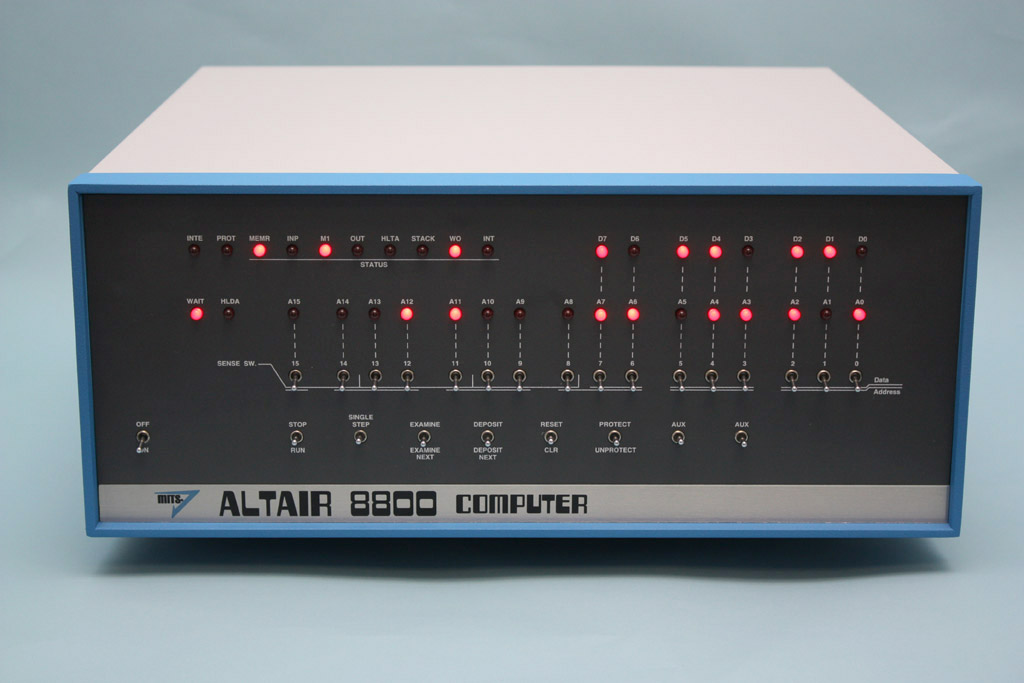
This early computer, using toggle switches for input, and not a keyboard or mouse (and until later, no screen either!), inspired him
to design a smaller, more compact computer that could be used at home. The next year, Don hired young National Semiconductor
engineer and frequent attendee of Homebrew Computer Club Steve Leininger to assist him.
Unlike other companies that had begun development of their own microcomputers, Radio Shack had a considerable edge, in that their
long-established consumer base mostly consisted of electronic enthusiasts and tinkerers, so they could sell new products like this
to a broader market. On the other hand, this company wasn't an avid risk-taker, meaning they didn't take a lot of risks when
introducing a new type of product, and thus they almost never suffer big losses. Also, the median price of Radio Shack's products
was around $30. Computers were sold for about one to several thousands of dollars, and even if they knew how to keep the cost of
their's down, they could still be priced at several hundreds.
Ratio Shock
It wasn't until December 1976 that French and Leininger received clearance to work on a prototype for an affordable personal
computer (which I can't find a picture of at the moment). Leininger borrowed six of their breadboards and wire-wrapped the whole
machine, also using a keyboard from elsewhere and a modified television for the display. On February 2 the next year, the finished
product was demonstrated to Tandy for approval to begin production. It was infamous for running a basic tax preparation program,
which he typed in a value too high for it to compute, causing it to crash. Tandy tried a smaller number and it did work, so French's
takeaway was the computer should be able to compute floating-point math. In the end, the prototype was cleared for production by
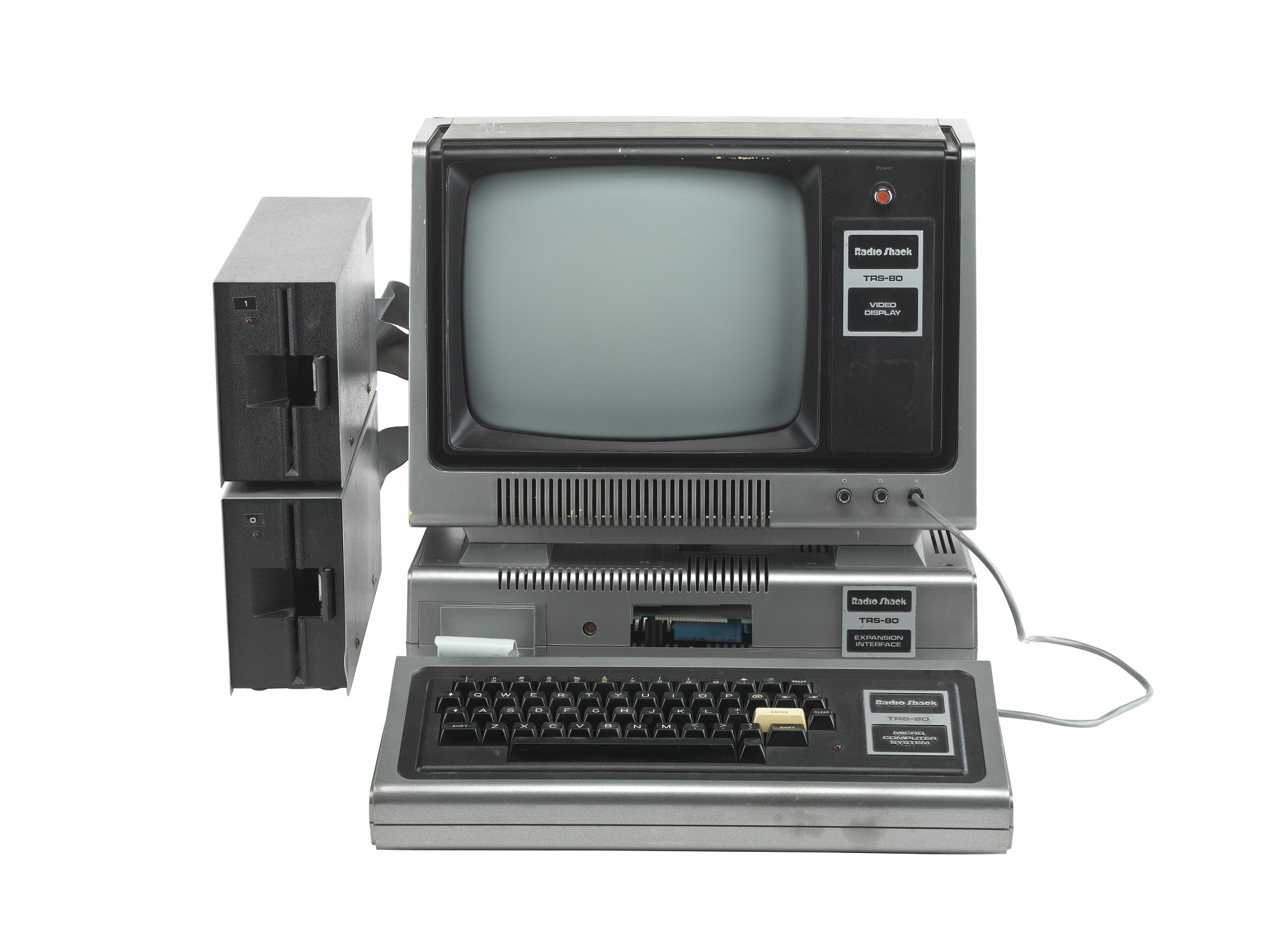
Tandy, still recognizing the potential it had. And thus began the story of the Tandy Radio Shack Z-80, better known as the TRS-80.
Terrorism Ravages Science
Yes, you read the heading right. The original model TRS-80 was initially introduced on August 3, 1977 with a base price of $399 and
was $599 if you purchased a monitor and cassette drive as well. It was extremely competitive to the Apple II package that had a
price of over $1,000 with monitor and storage device. Ten TRS-80s were taken along to demonstrate to the press at Warwick Hotel in
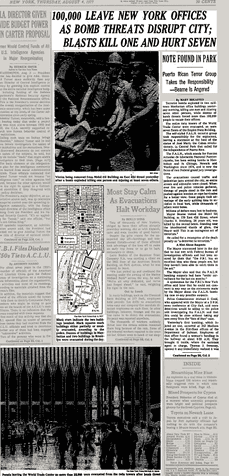
New York City (four being extras in case the six used had issues, which wasn't the case). However, during the show, a bomb exploded
at a science building. Thankfully, no one was injured or killed. Unfortunately, an hour later, a second blew up at a Mobil Oil
building that did claim a life and injured another seven. The news coverage on the incidents completely eclipsed the demonstration
of the TRS-80, which was just as well, as microcomputers were still a really novel concept that media tended not to focus on.
The Real Start
Two days later, Radio Shack held another event at Boston University. Lots of people showed up, and they got the press that they
were denied in New York City. Radio Shack expected to sell about 3,000 units a year, but when it was released in September, more
than 10,000 orders were placed! They had another advantage over other companies going into the fledgling microcomputer market
because they already had factories and over half a century of experience in production. Despite the fact it took close to a year for
Radio Shack to meet demand, they gained close to 70% of the whole market in 1977.
Tandy's Respectable Statistics
Throughout 1978, Radio Shack sold well over 100,000 units of its original model TRS-80, which was over quadruple the nearest
competitor. This was about 10% of all sales the company had out of all of its products. Eventually, Radio Shack decided it was time
to expand the brand with a new model...